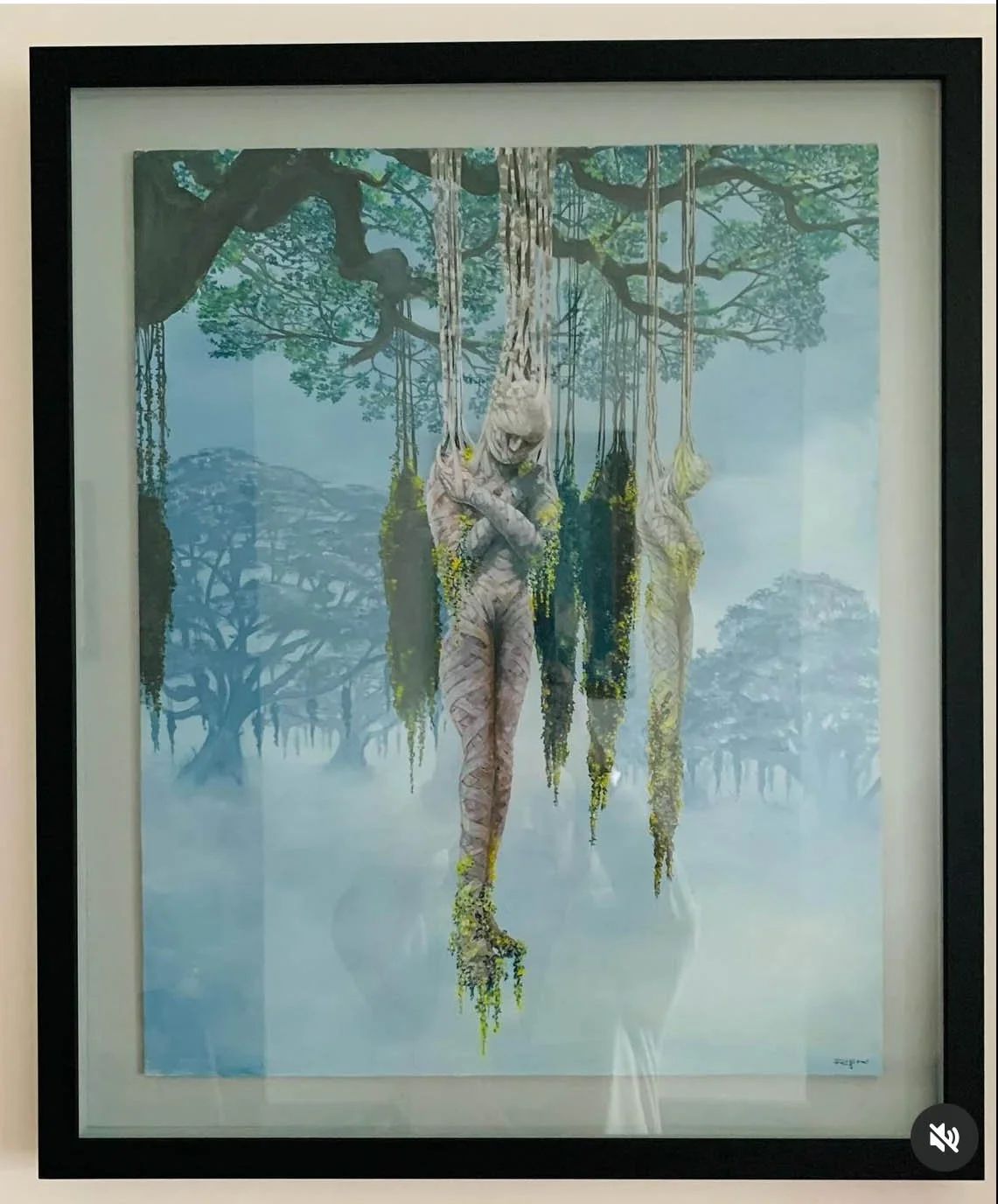
Cemetery
One day I found myself thinking about how I’d like to be buried when I finally pop my clogs. I’ve always known I want to be buried rather than cremated (a gentle reminder to the family), but then my thoughts turned to where that burial might be.
One option would be a traditional one: the local churchyard. In my case, it would be the same church grounds where we were married. That felt meaningful, familiar, and sensible. But then another idea crept in, one that felt far more me. What if you could be buried in your favourite place?
For me, that place is a hollow at the top of Harting Hill on the South Downs in the UK. It’s a spot where, while mountain biking with friends, we would always stop. A place to pause, catch breath, take in the view. It holds memories, laughter, and a quiet sense of freedom.
The thought process evolved: be buried in your favourite spot, plant a tree above you, and let future generations spend time in its shade. A place of rest, reflection, and connection. But then I took it a step further. Why stop at one? Why not create a family tree, quite literally? A place where departed family members are hung from the branches, eventually wrapped and reclaimed by vines and growth, slowly absorbed back into nature.
Over time, the tree would cover them completely. It would become a place not of mourning, but of life. Somewhere to visit, to picnic, to laugh, and to remember. A strange idea, perhaps, but also a celebration of cycles, connection, and the idea that death doesn’t have to be sombre. It can be part of something living, shared, and quietly joyful.
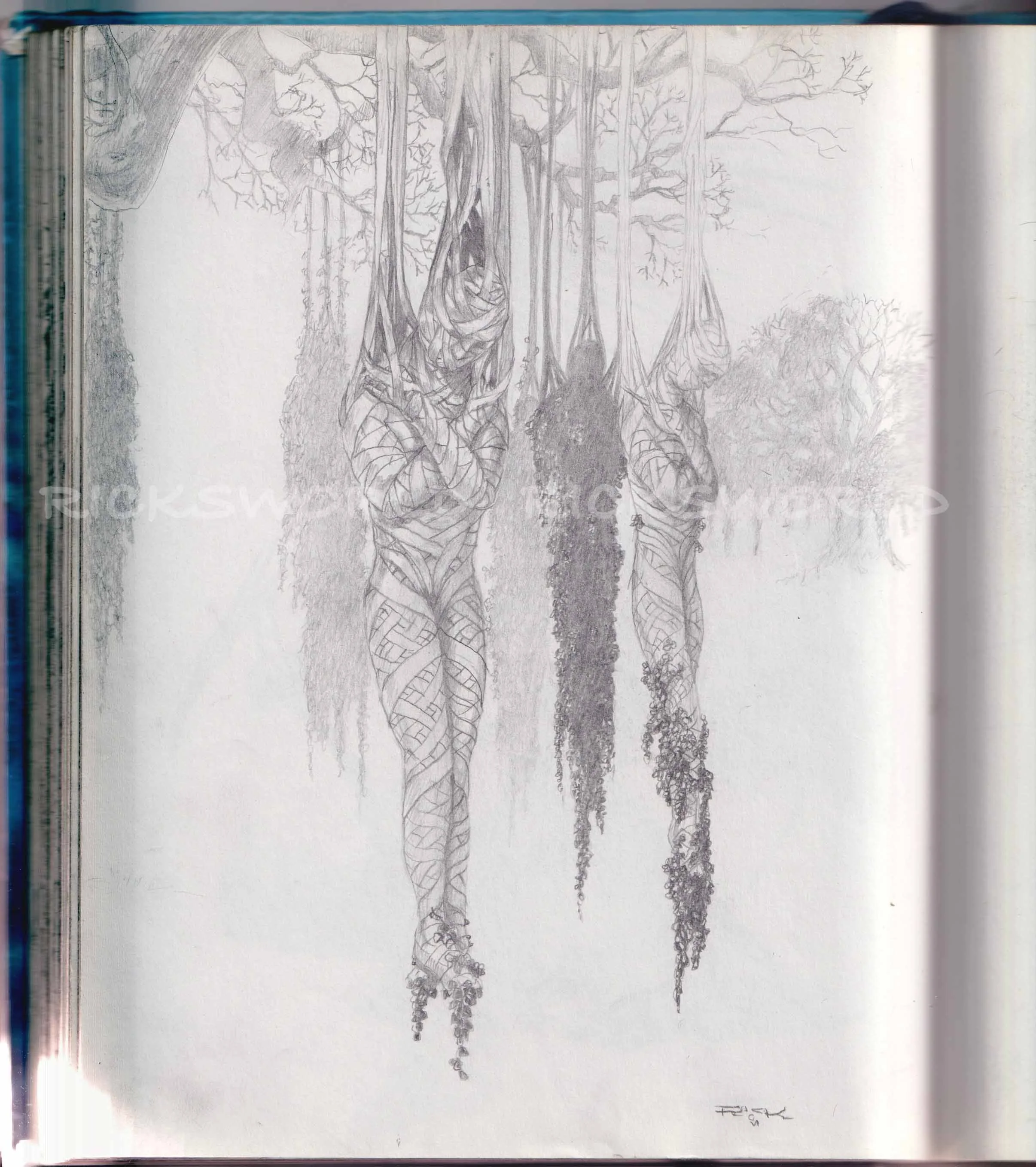
Original Pencil Sketch (2005)
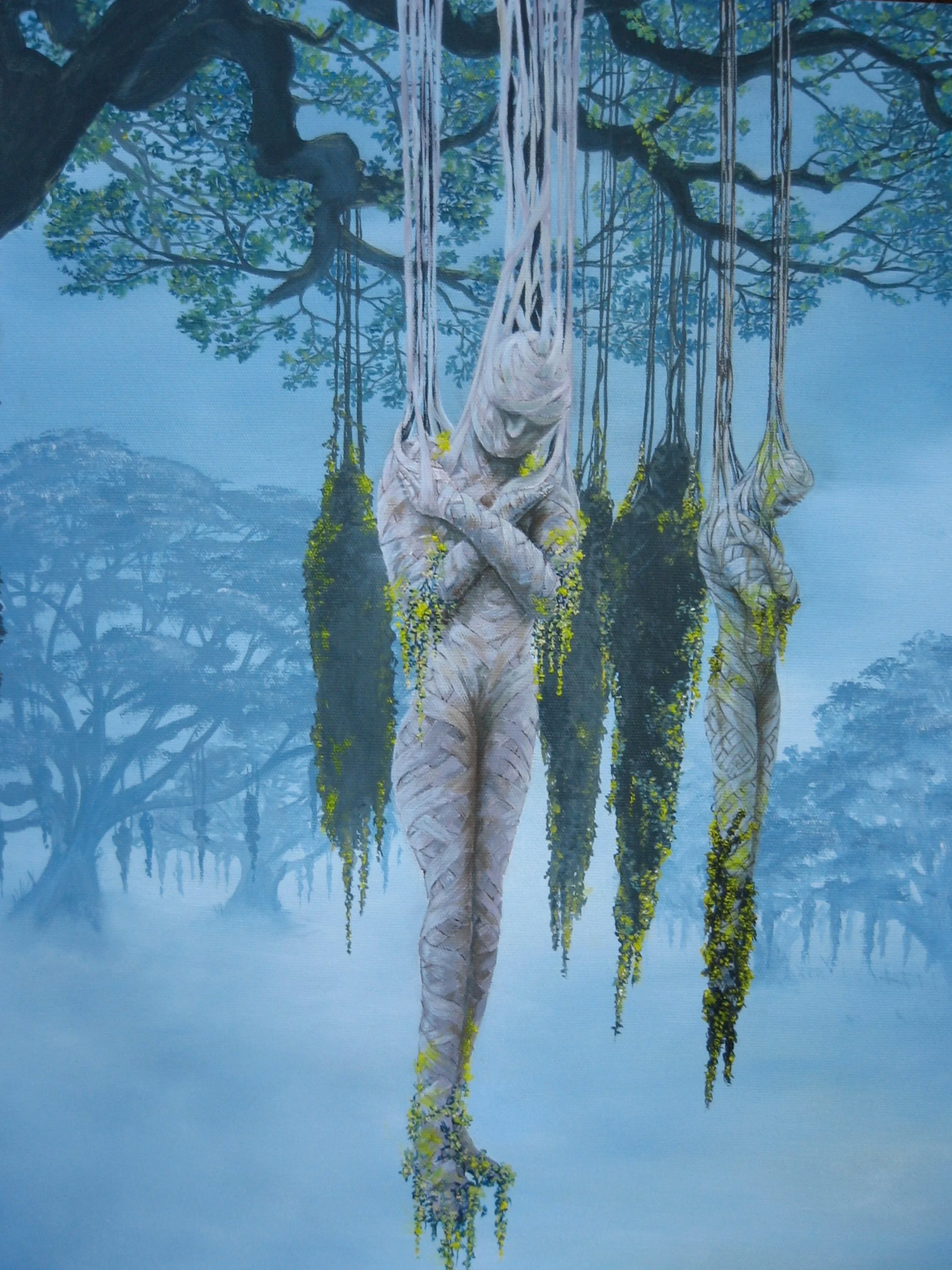
Final painting oil on canvas board (2013)
This was one of those pieces I genuinely enjoyed painting, even though I still consider the final work more of a sketch than a finished painting, a painted study rather than a resolved piece. The idea I had in mind was always larger in scale: a wide, bright landscape painted on a sunny day, where both the orchard cemetery and the distant hills and fields could exist together within the same space.
The painting itself was completed many years ago and then quietly forgotten. It sat stacked with other works in my old studio at our previous house, marked over time by tea stains and the odd splash of paint. Despite its imperfect state, I shared it on Instagram during the Emsworth Arts Trail, partly to show that there was more to see in my open studio than just the bright, colourful landscapes I’m often associated with.
To my surprise, I received a direct message from a local woman who had seen the post and wanted to know if the piece was for sale. It was refreshing to find a like-minded person who connected with it as it was. I was more than happy to sell it, for a nominal amount, even though I still see it as a rough rendering of an idea that may one day become a much larger artwork.
All it needed in the end was a quick removal of the tea stains and a few touch-ups to cover the paint splashes. And just like that, the painting found its home.
And so, that is the story of Cemetery.